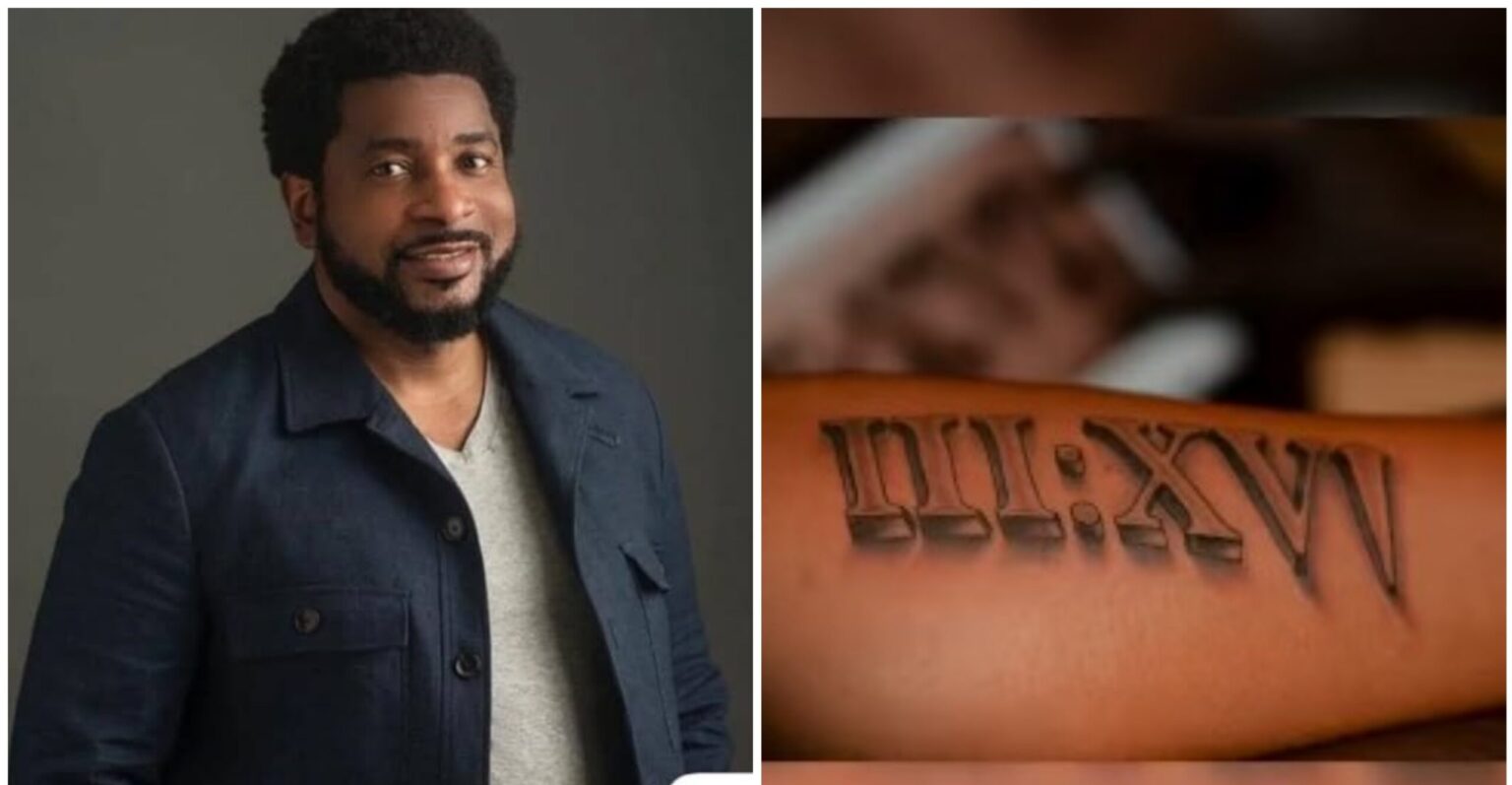
Is Revelation 19:16 tattoo evidence that Jesus had body art, or is the passage being misunderstood? Revelation 19:16 is frequently pulled into modern debates about tattoos. The verse says Jesus has a name written on His robe and on His thigh: King of Kings and Lord of Lords. Some readers take this as proof that Jesus had a tattoo and conclude that tattoos are therefore endorsed for Christians. But that conclusion depends on reading a symbolic vision as a literal description of Christ’s body.
To understand Revelation 19:16 correctly, we must read it according to the kind of book Revelation is and the purpose the passage is meant to serve.
Pastor Kingsley’s tattoo controversy: click here to read my response
When people use a single verse to justify a preference, they often practice eisegesis—reading into Scripture what they want to find—instead of letting Scripture speak for itself. That habit usually shows up as proof-texting: pulling a line out of a symbolic vision and treating it like a permission slip.
“When lifestyle leads and Scripture follows, interpretation becomes distortion.”
Revelation Is Symbolic, Not Anatomical
Revelation belongs to apocalyptic literature, and it communicates truth through visions, symbols, and vivid imagery. John does not write a biography or a medical description of Jesus. Instead, he records what he saw in a prophetic vision that reveals Christ’s authority, judgment, and victory.
“Not every ‘written’ detail in Revelation is literal ink on skin. Often, it is a way of saying this truth cannot be hidden.”
This becomes clear when we notice how Revelation consistently portrays Jesus. He is described as the conquering King, the Lion of Judah, and also the Lamb who was slain. No serious reader concludes that Jesus is literally walking on four legs like an animal. The image of the Lamb communicates sacrifice, innocence, and redemption, not physical posture.
To read about what a quiet divorce means, click here
In the same way, Revelation 19 describes a sharp sword coming out of Jesus’ mouth. Therefore, that sword represents judgment and the power of His word. It is not a literal weapon. These examples establish an important rule: Revelation reveals truth through symbolism, not biology.
“If we force every image in Revelation to be literal, we will miss the truth the images were meant to reveal.”
Why the Robe Matters More Than the Thigh
Revelation 19:16 says the name is written on His robe and on His thigh. The order matters. The robe is mentioned first, and the text never says the name is written on His skin. By contrast, tattoos are written on flesh, not on clothing. If the passage was intended to describe body art, it could have clearly done so. Instead, it emphasises royal display.
In the ancient world, kings and warriors often displayed titles on garments, sashes, banners, or armor. Writing on a robe was a public declaration of rank and authority. The reference to the thigh reinforces the same message. In biblical and ancient symbolism, the thigh is associated with strength and power. Together, the image points to dominion, not decoration.
The vision presents Jesus as a King whose authority stands visible and undeniable, not as someone modelling a cultural practice.
“Revelation 19 is about authority on display, not a tattoo as a lifestyle example.”
Does Revelation 19:16 Support the Tattoo Argument?
Revelation 19:16 never aimed to settle modern lifestyle debates. It is unveiling a conquering King. Using it as a proof text for tattoos shifts the focus away from the passage’s purpose.
However, that does not mean Christians cannot discuss tattoos thoughtfully. But decisions about tattoos should be guided by wisdom, motive, conscience, and spiritual maturity, not by forcing symbolic prophecy into a permission slip.
A better set of questions is more personal and more challenging. Why do I want this? Does it honor Christ or center attention on me? Will it help or hinder my witness? Can I do this with a clear conscience before God? Scripture consistently prioritizes inner formation over outward expression.
The Revelation 19:16 tattoo interpretation depends entirely on whether the book is read symbolically or literally.
The Clear Meaning of Revelation 19:16
Revelation 19:16 is not describing Jesus having a tattoo. It is revealing Jesus as the conquering King whose identity and authority are publicly displayed. The passage is about lordship, not ink.
Ultimately, the real weight of the verse is not what might be written on Christ’s body, but whether His kingship has left its mark on our hearts. Revelation is not asking us to debate appearance. It is calling us to recognize who reigns.
Read in context, Revelation 19:16 tattoo arguments weaken, because the passage is about kingship on display—not a lifestyle pattern for believers.
If this helped you read Revelation with clearer eyes, share it with a friend who loves Scripture but may be tempted to use a verse as a permission slip. Then take a moment to ask: Is Christ’s kingship visible in my life—not just in my opinions?
What’s your honest take on Revelation 19:16 and the tattoo debate? Drop a comment below, and if you want more straightforward, context-first Bible teaching, subscribe to the blog so you don’t miss the next post.