
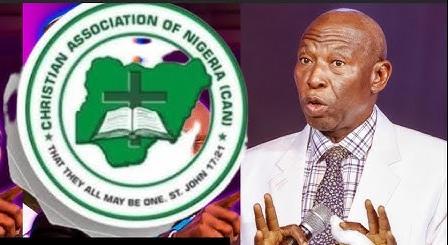
Rev. Isaac Omolehin, CAN, and PFN have become part of a larger conversation about Christian leadership, accountability, honor, and the treatment of faithful servants in the body of Christ. At a time when many Christians in Nigeria face killings, displacement, fear, and silence, the church must ask a serious question: Are its loudest voices speaking with courage, balance, and spiritual responsibility?
Rev. Isaac Omolehin is widely known as the founder of Word Assembly Ministries in Ilorin, Kwara State. He is also known as a Bible teacher, evangelist, and spiritual leader whose ministry has stretched across decades. This article does not defend error or silence accountability. It does not place any spiritual leader above correction. It calls for balance.
A person’s entire life should not be reduced to one controversy, one accusation, one statement, or one difficult season. Honor must not silence accountability, and accountability must not erase honor.
Why Rev. Isaac Omolehin’s Legacy Matters
The life and ministry of Rev. Isaac Omolehin deserve fairness, gratitude, and sober reflection. Every generation has servants whose years of labour may not be fully understood by those who meet them only through headlines, short clips, public arguments, or social media reactions.
That is why wisdom matters. Where questions need to be asked, they should be asked with truth. Where accountability is needed, it should be pursued with maturity. But where honor is due, it should not be denied.
Punch report on Omolehin/PFN dispute. Click to read more
Rev. Isaac Omolehin’s years of teaching, mentorship, evangelistic work, humanitarian service, and testimonies of God’s power should not be dismissed carelessly. A man who has spent decades preaching, building, serving, mentoring, and defending the gospel deserves more than emotional judgment.
“A generation that cannot honor faithful labor may soon lose the wisdom that preserved it.”
When Christian Leadership Must Look in the Mirror
This is also why the conversation around Rev. Isaac Omolehin, CAN, and PFN must be handled with wisdom and spiritual maturity. It becomes troubling when Christian leadership bodies appear more vocal in cautioning a man who has spent decades defending the gospel than they are in confronting the painful realities affecting suffering Christians.
At a time when Christians are being killed, displaced, kidnapped, and silenced, the strongest voices of the church should call believers into prayer, unity, advocacy, compassion, and spiritual action. Nigeria’s insecurity has wounded many communities. It has destroyed families. It has left many believers asking who will speak with courage.
The early church did not have money, political influence, media platforms, or national structures. Yet only 120 believers in the upper room received power from God and became instruments that turned their world upside down. If that small company could shake a generation through prayer, unity, courage, and the Holy Spirit, then national Christian leadership should be able to mobilize the church in prayer and action.
The concern is not that CAN or PFN should never speak on internal matters. They should. Accountability matters, and no leader should be above correction. But when leadership appears louder in cautioning a defender of the gospel than in organizing sustained prayers for suffering Christians, the church must ask honest questions.
Christian leadership must do more than issue statements. It must shape communities, comfort the wounded, defend the vulnerable, strengthen the persecuted, and call the body of Christ back to prayer.
“This is not a time for selective boldness. It is a time for spiritual courage, humility, and responsibility before God.”
Rev. Isaac Omolehin’s Ministry Journey
Rev. Isaac Omolehin’s ministry journey reflects consistency, discipline, and devotion to God’s work. His story connects with Bible teaching, evangelism, mentorship, crusades, and the raising of believers in faith and character.
In a generation drawn to noise, visibility, and applause, his journey reminds us that real impact is not always loud. Sometimes the deepest work of ministry happens quietly. It happens through years of preaching, counselling, correcting, encouraging, and standing firm in truth.
Many people remember spiritual fathers not only for the messages they preached but also for the lives they shaped. The fruit of ministry is not only found in the crowd that gathers. It is found in people who grow, families that become stronger, and hearts that return to God.
Rev. Isaac Omolehin and Humanitarian Service
One important part of Rev. Isaac Omolehin’s legacy is the humanitarian service connected to his family and ministry. This matters because ministry should never be measured by the pulpit alone. True ministry must also touch the broken, the abandoned, the vulnerable, and the forgotten.
Hope Motherless Babies Home. Click here to read more
Caring for motherless babies, abandoned children, and vulnerable people requires more than public preaching. It requires compassion, sacrifice, patience, and a willingness to serve people who may never repay you.
That kind of service speaks beyond words. It shows that faith must not only be preached; it must be lived.
“The strongest proof of ministry is not only what is preached, but the lives that are lifted.”
Rev. Isaac Omolehin and Testimonies of God’s Power
Beyond teaching and humanitarian work, Rev. Isaac Omolehin’s ministry has also been connected with testimonies of God’s power. Many who have followed his ministry remember accounts of healing, restoration, deliverance, and divine intervention shared through ministry platforms and personal testimonies.
These testimonies should always point back to God. They are not opportunities to glorify a person. A true servant does not become the source of power. He becomes a vessel. The glory must always return to God.
The church must avoid two dangers. It must not turn servants into idols. It must also not dishonor genuine vessels God has used. Balance is necessary. Testimonies should remind us of God’s mercy, not human perfection.
A Word of Encouragement to Rev. Isaac Omolehin
If by any chance Rev. Isaac Omolehin sees this article, I want to say this with humility and sincerity. I have never met you personally, and I have never had the privilege of speaking with you. But your years of service, sacrifice, and commitment to the gospel are not invisible.
In a season when words can be twisted and intentions misunderstood, may the Lord strengthen your heart. May He comfort you, renew your strength, and remind you that no sincere labor in His vineyard is ever wasted.
Sir, many people may never fully understand the battles you have fought, the sacrifices you have made, the burdens you have carried, or the lives you have quietly touched. But God sees. God knows. God remembers.
May the Lord uphold you, preserve your family, strengthen your ministry, and give you peace in this season.
My Final Reflection on Rev. Isaac Omolehin, CAN and PFN
The conversation around Rev. Isaac Omolehin, CAN, and PFN should not become another careless social media fight. It should become a moment of reflection for the church. How do we honor fathers without excusing error? How do we demand accountability without destroying legacy? How do we speak truth without losing love?
The church must continue to demand integrity from leaders. It must also honor faithful service where it exists. We can ask questions without disrespect. We can pursue accountability without destroying legacy. We can speak truth without losing compassion.
A wake-up call for CAN and PFN. Click here to read more
At the end, every servant of God is still human, and every true testimony belongs to God alone. May God strengthen His church, preserve His servants, awaken Christian leadership, and help this generation walk in truth, wisdom, honor, courage, and humility.
What are your thoughts on Rev. Isaac Omolehin, CAN, PFN, honor, accountability, and Christian leadership in Nigeria? Share your thoughts in the comments, and follow @iamsojiolateru for more honest conversations on faith, leadership, marriage, and family values.