
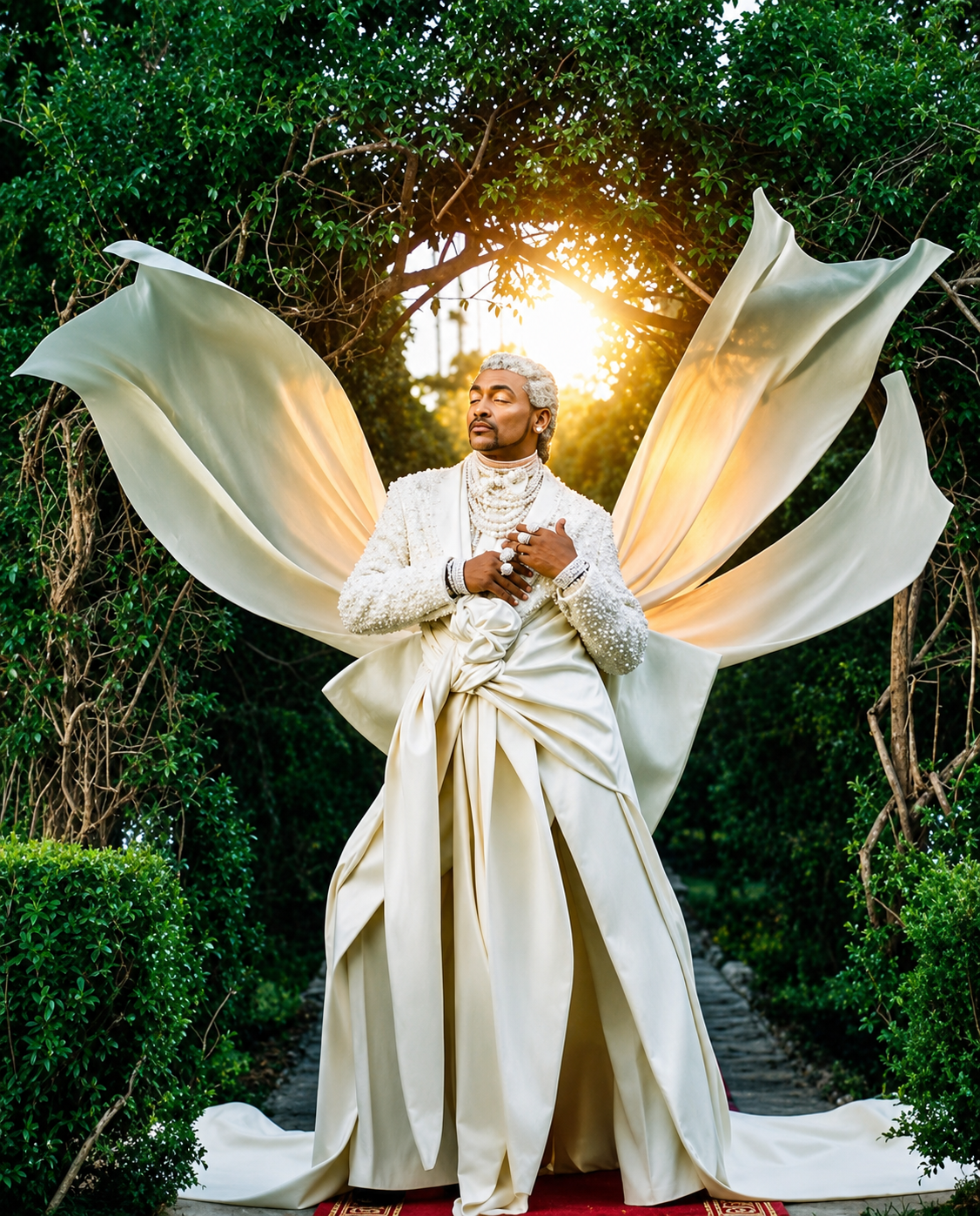
Denrele Self-Marriage and the Changing Meaning of Relationships
Imagine receiving an invitation to a wedding and discovering there is no bride waiting at the altar and no groom preparing to exchange vows with another person. Only one person is standing there, ready to commit to himself. A few years ago, such a scene would have sounded absurd. Today, many people describe it as self-love.
That is why Denrele Edun’s symbolic self-marriage at 45 has generated so much conversation. It is not simply because of the photographs or headlines. Rather, the gesture forces us to confront an uncomfortable question: Are we learning how to value ourselves, or are we gradually losing the meaning of relationships?
A wedding is traditionally a public ceremony through which two people enter a recognized marital union. At its heart are commitment, partnership, responsibility, and the decision to build a life with someone else. Remove one person from that equation and the meaning of the ceremony begins to change.
Reg flags in Relationship. Click to read
The debate surrounding Denrele Self-Marriage goes beyond celebrity culture. More importantly, the discussion raises important questions about commitment, companionship, emotional healing, and whether modern society is slowly replacing meaningful relationships with self-celebration.
Why Denrele Self-Marriage Has Sparked Debate
We live in a generation carrying emotional scars. Failed relationships, betrayal, disappointment, delayed marriage, and unrealistic expectations have left many people emotionally exhausted. In that environment, self-love sounds attractive. Understanding personal worth is healthy; however, problems emerge when self-love evolves into a belief that meaningful relationships are no longer necessary.
What begins as healing can gradually become isolation, and what starts as confidence can evolve into a belief that connection is optional. Consequently, Denrele Self-Marriage has generated strong reactions across social media and beyond. Supporters see confidence and self-acceptance, while critics see a reflection of a culture becoming increasingly centered on self.
Self-Worth and Self-Worship Are Not the Same Thing
There is nothing wrong with appreciating yourself. Every healthy person should recognize their value. Problems begin when self-love becomes the highest goal in life.
“Self-love reminds you of your value. Self-worship convinces you that you are all you need.”
That distinction matters.
For generations, relationships thrived on sacrifice, compromise, accountability, and mutual commitment. Love required two people willing to share responsibility and grow together despite their imperfections. Today, however, society often celebrates independence to such an extent that many people view needing others as weakness.
Emotional Abuse in Marriage. Click to read
As a result, emotional isolation is frequently disguised as empowerment. Many people want intimacy without vulnerability, companionship without commitment, and love without sacrifice. Nevertheless, meaningful relationships have never worked that way.
Why Self-Marriage Should Not Become a Cultural Ideal
Denrele likely intended his symbolic wedding as artistic expression. Nevertheless, the philosophy behind self-marriage deserves careful examination.
Healthy communities are built on connection. Families thrive when people choose one another. Likewise, communities grow stronger when individuals contribute to something larger than themselves. Relationships create growth opportunities that isolation can never provide.
Beyond the ceremony itself, the bigger concern is the message self-marriage may communicate to a generation already struggling with commitment, trust, and emotional connection.
The Hidden Cost of Choosing Yourself Above Everyone Else
The danger is not self-love itself. Instead, the danger emerges when self-love slowly transforms into self-obsession.
“A society that teaches self-worth without self-sacrifice may produce confident people, but not necessarily loving people.”
Confidence is important. However, confidence alone cannot satisfy the human need for belonging. Human beings thrive through connection, community, shared experiences, and mutual responsibility. Therefore, the healthiest lives are not built by people who never need anyone. They are built by people who understand their worth while remaining open to meaningful relationships.
Are We Healing From Heartbreak or Escaping Commitment?
One danger of modern self-love culture is that it can confuse healing with avoidance. Real healing restores a person’s ability to trust, connect, and love again. In contrast, avoidance simply builds stronger walls around the heart.
“The opposite of loneliness is not self-love. It is meaningful connection.”
Consequently, many people who have experienced disappointment seek protection from future pain. However, protecting ourselves from every emotional risk often prevents us from experiencing the very relationships capable of bringing growth, support, companionship, and joy.
The goal should not be emotional isolation. The goal should be emotional maturity.
Singleness Is Not a Disease
A person’s worth is not determined by marital status. Being single does not make someone incomplete, and being married does not automatically make someone successful.
Singleness is not a disease, and marriage is not the only path to fulfillment. At the same time, meaningful relationships remain one of the most important parts of the human experience.
What Denrele Self-Marriage Reveals About Modern Relationships
There is a growing tendency to treat personal fulfillment as life’s highest goal. Anything that demands sacrifice becomes optional. Anything that requires accountability becomes restrictive. Meanwhile, anything that challenges personal desires becomes undesirable.
“Real love begins where self-interest ends.”
Ultimately, the strongest relationships are not built by people who never need anyone. They are built by people who understand their value while remaining willing to share their lives with others.
Moreover, every generation creates symbols that reflect its values. While some people view Denrele Self-Marriage as harmless self-expression, others see it as evidence of a culture increasingly focused on individual fulfillment. Consequently, the discussion extends beyond one celebrity and becomes a conversation about the future of relationships themselves.
The debate over Denrele Self-Marriage reveals a deeper struggle within modern relationships and explains why the topic continues to generate widespread attention.
Final Thoughts: Are We Losing the Meaning of Relationships?
A wedding was never designed to celebrate one person. It was designed to unite two lives.
“A fulfilled life is not built on self-celebration alone. It is built on purpose, connection, and the willingness to share life with others.”
The real issue is not whether Denrele married himself. Instead, the real issue is what Denrele Self-Marriage reveals about how modern society views commitment, relationships, and personal fulfillment. Confidence and self-worth matter; however, the healthiest lives are built not around self-celebration alone, but around relationships, community, and shared experiences.
This is why the conversation around Denrele Self-Marriage should not end as celebrity gossip. Rather, it should continue as a serious reflection on love, commitment, connection, and the values that shape our relationships.
What do you think? Has Denrele Self-Marriage started an important conversation about self-worth and relationships, or does it encourage a culture of self-celebration over connection? Share your thoughts in the comments and follow @iamsojiolateru for more conversations on faith, family, culture, and relationships.